Direct Answer
Getting a strong trade-in offer starts with knowing what your vehicle is worth before you visit a dealership. A realistic estimate gives you a useful starting point, but the final amount can depend on the vehicle’s condition, mileage, maintenance history, local demand, and the details of your replacement-vehicle purchase.
For drivers researching car trade-in value in Washington, the process also involves understanding regional buying patterns and the state’s trade-in sales-tax treatment. Rather than relying on one online estimate, build a reasonable valuation range, support it with documentation, and compare written offers.
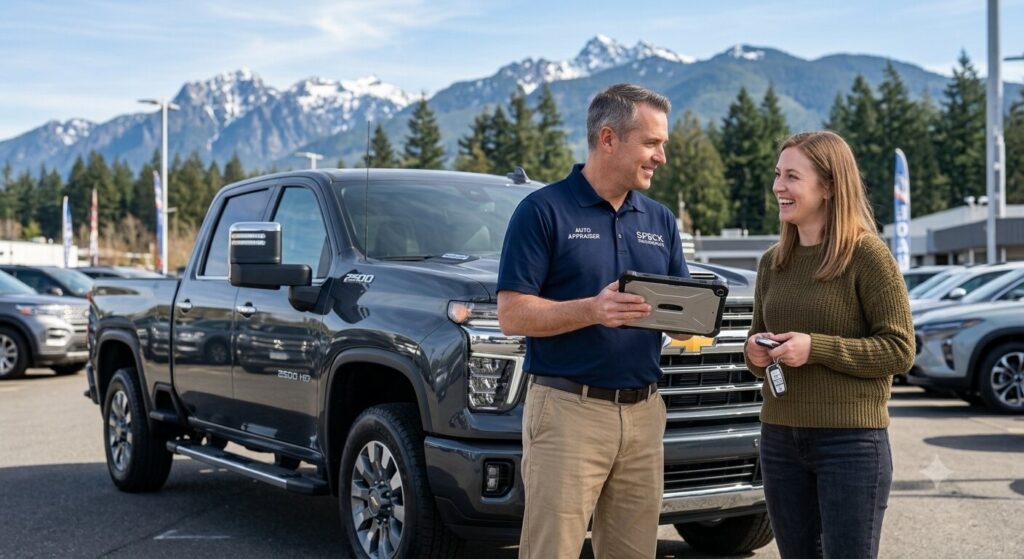
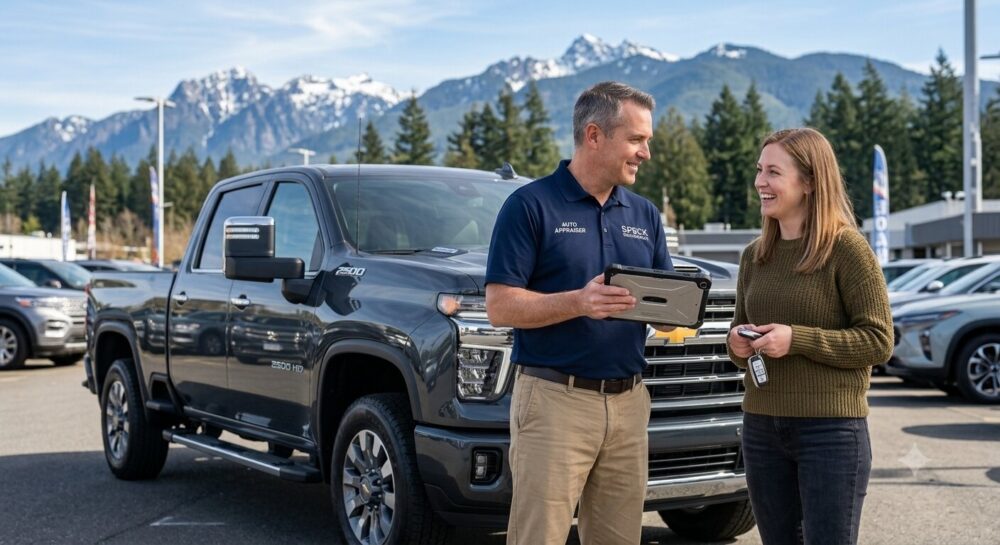
Speck dealership appraiser reviewing a customer’s pickup truck trade-in value using a tablet at a Washington dealership.
Start With an Evidence-Based Vehicle Valuation
An online estimate can help you understand the market, but it is only as reliable as the information you enter. Before using a valuation tool, collect the details that distinguish your vehicle from similar models.
Record the following:
- Vehicle identification number (VIN), year, make, and model
- Exact trim level and drivetrain
- Current mileage
- Installed options and equipment
- General interior and exterior condition
- Known mechanical problems and accident history
Use established automotive valuation resources such as Kelley Blue Book or Edmunds. Enter consistent information into multiple tools so you can compare estimates on similar terms.
Choose the correct value category
A private-party estimate or retail asking price is not the same as a trade-in estimate. A dealership evaluates a vehicle with its expected reconditioning costs, resale prospects, and current inventory needs in mind.
Select the trade-in value category when using valuation tools. Be realistic about the condition grade, too. Describing an average vehicle as excellent can produce an unrealistic expectation and make later offers seem disappointing.
Investigate why estimates differ
Two valuation tools may produce different figures because they use different data, assumptions, and market inputs. Review the vehicle details and condition descriptions before deciding which estimate is more relevant.
Save dated screenshots of your results. They provide a record of the estimates you reviewed and help you remember the market range you were considering when you requested dealership appraisals.
Turn Estimates Into Offers You Can Compare
A valuation calculator does not guarantee what a buyer will pay. Written appraisals provide a more practical way to understand what your vehicle may bring in an actual transaction.
Request offers from more than one qualified buyer within a reasonably short period. Give each one accurate information about the vehicle, including known damage and mechanical concerns. When an offer depends on an inspection, understand that the final amount may change after the vehicle is evaluated.
Compare the written figures and the conditions attached to them. The highest initial estimate is not necessarily the strongest offer if it changes substantially after inspection.
A realistic car trade-in value in Washington should be supported by both market research and an offer that a buyer is prepared to honor.
Understand What Washington Buyers May Value
Local demand can influence how a dealership evaluates a vehicle. Washington drivers do not all shop for the same types of transportation, and regional conditions can affect what buyers are looking for.
Vehicles in the Pacific Northwest may experience damp winters, road treatment in mountainous areas, and dusty conditions on rural agricultural routes. A vehicle’s maintenance history and evidence of care can help an appraiser understand how it has handled those conditions.
Demand can also differ by location:
- Seattle and surrounding commuter areas: Fuel-efficient hybrids and all-wheel-drive crossovers may appeal to buyers with different commuting and travel needs.
- Tri-Cities and Yakima: Four-wheel-drive pickups may attract interest from drivers in rural and agricultural communities.
- Seasonal markets: All-wheel-drive vehicles may receive additional attention before winter, when some buyers begin preparing for snowy driving conditions.
These are market considerations, not guarantees of a higher offer. Inventory, vehicle condition, and current buyer demand still matter.
Prepare Documentation That Supports Your Asking Range
Your vehicle’s service history can help reduce uncertainty during an appraisal. Instead of relying on a verbal description of past maintenance, gather the records that show what has actually been done.
Organize available invoices and service documents chronologically. Include records for oil changes, brake work, fluid replacements, tire maintenance, and professional repairs.
A complete maintenance folder gives an appraiser a clearer picture of the vehicle’s upkeep. It can also help answer questions about previous work without relying on memory.
Make the vehicle ready for inspection
Presentation does not determine the vehicle’s mechanical condition, but a clean interior and exterior make it easier to evaluate.
Before your appointment:
- Remove personal belongings, trash, and loose charging cables.
- Vacuum carpets, seats, cargo areas, and spaces beneath the seats.
- Wash the exterior and clean the wheels and plastic trim.
- Clean the windows inside and out.
- Check that matching tires are properly inflated.
- Replace inexpensive burnt-out bulbs and correct low fluid levels.
- Consider repairing a small windshield chip if the cost is reasonable.
Avoid spending heavily on major repairs without first comparing the repair cost with the possible increase in trade-in value. Dealerships may be able to complete certain repairs more efficiently through their own service departments and parts resources.
Calculate the Financial Value of the Entire Deal
The car trade-in value in Washington allowance is only one part of a vehicle purchase. Washington’s trade-in sales-tax treatment can make the allowance especially important when you apply it toward another eligible vehicle purchase.
Under the state’s trade-in tax rules described in the Washington Department of Revenue guidance, the trade-in value is deducted from the replacement vehicle’s purchase price when calculating the taxable difference. That means a stronger qualifying trade-in allowance can reduce the amount subject to sales tax.
For example, a higher allowance may provide value in two ways: it increases the amount credited toward the replacement vehicle and can reduce the taxable balance of the purchase.
Ask the dealership for a written transaction breakdown. Review the vehicle price, trade-in allowance, loan payoff, applicable tax calculation, fees, interest rate, and loan term. This makes it easier to compare offers based on the overall financial result rather than one attractive number.
A private buyer might offer more cash than a dealership. However, you should also consider the time and effort involved, payment risks, and the potential loss of the trade-in sales-tax benefit. Compare the actual numbers before deciding which route makes more sense.
Avoid Problems That Can Undermine Your Offer
Transparency helps keep the appraisal process straightforward. Disclose known mechanical problems, previous accidents, and body repairs rather than hoping an appraiser will overlook them. Vehicle history reports and diagnostic equipment may reveal information that affects the evaluation.
If the vehicle has been in an accident, bring available documentation showing that repairs were completed professionally. An accident can affect value, but repair records help an appraiser assess the work rather than relying only on the history entry.
Also, avoid focusing exclusively on the monthly payment when discussing your next vehicle. A lower payment can result from a longer loan term rather than a better overall deal. Review the full purchase figures alongside your trade-in allowance.
Complete the Details Before Handing Over the Keys
A few practical checks can prevent avoidable delays and deductions during the transaction.
- Bring every key and fob: Missing smart keys can be expensive to replace.
- Review aftermarket accessories: Custom stereos, specialized wheels, and racks may not add the value you expect. Consider restoring factory equipment when practical.
- Check your paperwork: Keep registration information current and have the vehicle title available if applicable.
- Remove personal information: Factory-reset the infotainment system and clear saved addresses, garage codes, contacts, and paired phones.
If you still owe money on the vehicle, ask the dealership to obtain the current payoff amount from your lender. When the trade-in allowance exceeds the payoff, the remaining positive equity can be applied toward the next purchase. If the payoff is higher, the difference must also be accounted for in the transaction.
Frequently Asked Questions
How can I estimate my car trade-in value in Washington?
Start with the exact VIN, trim, mileage, equipment, and honest condition grade. Compare trade-in estimates from established valuation tools, then request written appraisals from multiple buyers.
Does Washington’s trade-in sales-tax treatment affect my decision?
Yes. An eligible trade-in can reduce the taxable difference between the trade allowance and the replacement vehicle’s purchase price. Ask for a written breakdown so you can see how the calculation affects the transaction.
Should I repair major mechanical problems before trading in my vehicle?
Not automatically. Compare the repair estimate with the likely increase in trade-in allowance. Dealerships may have access to internal service departments and parts resources that make certain repairs less expensive for them.
Will an accident history make my vehicle impossible to trade in?
No. An accident can lower the vehicle’s value, but it does not automatically prevent a trade-in. Documentation showing that repairs were completed by a professional body shop can help the appraiser evaluate its condition.
Can I trade in a vehicle that still has an outstanding loan?
Yes. The dealership can contact your lender to obtain the payoff amount. The difference between the trade-in allowance and the loan balance determines whether you have positive or negative equity.
Final Thoughts
A successful trade-in is based on more than finding the highest number on an online calculator. Research gives you a starting range, maintenance records support your vehicle’s condition, and written appraisals show what buyers are actually willing to offer.
For drivers comparing car trade-in value in Washington, local demand and the state’s sales-tax treatment also belong in the calculation. Take time to review the complete transaction, disclose the vehicle’s condition honestly, and compare offers before making a decision.
Before you begin the trade-in process, taking a few minutes to explore our online resources or consulting with our auto finance department can help you see exactly how your trade-in equity impacts your upcoming monthly payments
Ready to find your next vehicle? Visit Speck Dealerships today — or browse our inventory online.
Related reading: Washington car-buying checklist; Local dealer versus Carvana.