Direct Answer
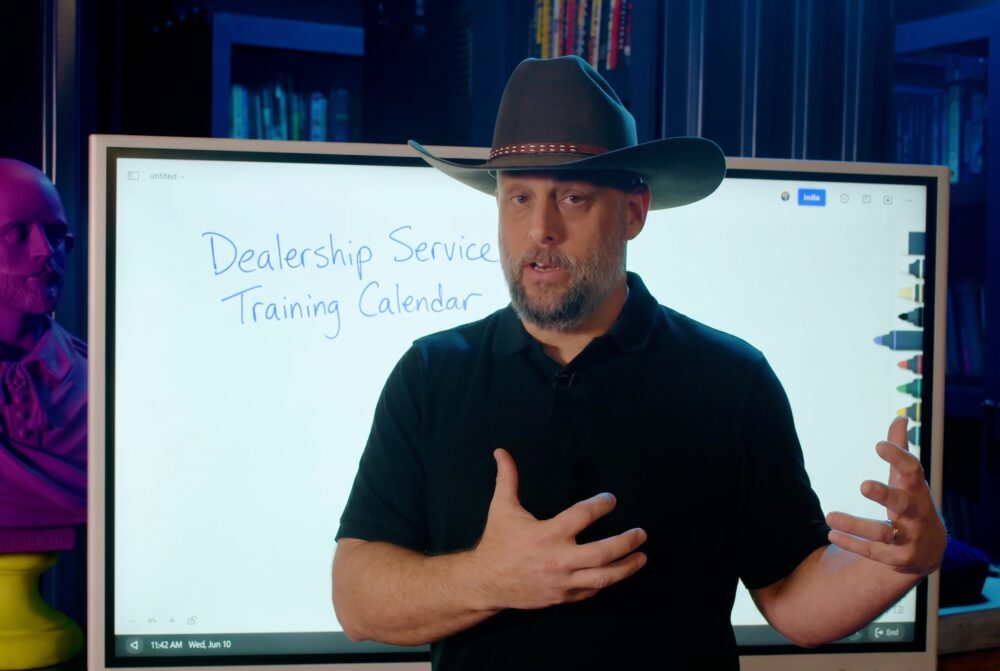
A dealership service training calendar gives technicians and service advisors a consistent plan for developing skills throughout the year. It combines technical instruction, customer communication, compliance training, and practical exercises with regular performance reviews.
Instead of relying on occasional meetings, managers can use daily huddles, weekly skill sessions, monthly workshops, and quarterly reviews. Each activity should address a specific need identified through shop performance and employee assessments.

Key Takeaways
- A planned calendar makes employee development consistent.
- Technical, communication, and compliance training should receive attention.
- Performance data helps managers identify training priorities.
- Role-play and hands-on exercises turn lessons into practical skills.
- Split shifts and protected training time help maintain shop operations.
- Coaching and KPI reviews show whether employees are improving.
Why a Structured Training Calendar Matters
Replace Last-Minute Instruction
When training happens only after mistakes occur, employees may receive inconsistent guidance. A dealership service training calendar gives managers a way to address skill gaps before they become recurring problems.
Give Employees Clear Expectations
A published schedule tells employees what they will learn, when sessions take place, and how their progress will be evaluated.
Support Retention and Performance
Employees benefit from clear development opportunities. Consistent instruction can also improve repair quality, customer communication, and daily workflow.
Core Areas to Include
Technical Development
Plan training in diagnostics, inspections, electrical systems, safety procedures, specialized tools, and factory certifications. Include instruction for newer vehicle technologies, such as high-voltage EV systems.
Advisor Communication
Cover customer greetings, vehicle walk-arounds, digital inspections, estimates, status updates, objection handling, and follow-up.
Systems and Compliance
Schedule instruction on DMS procedures, warranty documentation, hazardous waste handling, lift inspections, and required dealership policies.
Build the Calendar Step by Step
Step 1: Identify Training Needs
Review repair orders, video inspection completion, warranty rejections, employee evaluations, and customer feedback. Metrics such as effective labor rate, hours per repair order, MPI conversion, and first-time fix rate can reveal where additional instruction is needed.
Step 2: Establish Quarterly Priorities
Use annual themes to organize development:
- Q1: Reinforce fundamental processes.
- Q2: Prepare for summer maintenance demand.
- Q3: Improve performance during busy periods.
- Q4: Complete recertification and plan the next year.
Adjust these priorities when seasonal demand, new products, or policy changes require attention.
Step 3: Schedule Monthly and Weekly Activities
Break each quarterly objective into smaller lessons. Use monthly workshops for broader topics, weekly sessions for individual skills, and daily huddles for short reminders.
Make Practice Part of Advisor Training
Rehearse Common Customer Conversations
Advisors should practice situations they encounter at the service drive, including vehicle check-in, explaining inspection findings, presenting recommendations, handling objections, and communicating delays.
Use a Repeatable Role-Play Method
Assign one advisor to play the customer, another to handle the conversation, and a third to observe. Give the observer a specific behavior to evaluate, such as whether the advisor explained the recommendation clearly.
After the exercise, discuss what worked and repeat the scenario with one improvement in mind.
Connect Practice to Customer Feedback
Review recorded calls, live interactions, CSI comments, and repair-order notes. These examples help managers determine whether classroom lessons are translating into better customer experiences.
Protect Training Time
- Rotate employee groups: Use split shifts so some employees continue serving customers while others attend training.
- Control appointment volume: Reduce morning appointment density by 15% during scheduled sessions when needed.
- Reserve demonstration space: Keep a bay available for supervised diagnostic work and hands-on instruction.
- Protect technician earnings: Pay flat-rate employees their average hourly rate during required training.
Measure Progress and Adjust
Use regular audits to check inspection accuracy, repair-order documentation, customer calls, and technical work. Monthly coaching sessions can help managers review individual performance and set the next development goal.
Track indicators such as CSI, effective labor rate, hours per repair order, comeback rate, warranty chargebacks, and employee retention. Compare results over time rather than assuming attendance alone proves that training worked.
Ready to Fill Your Calendar With Proven Fixed Ops Training?
A busy schedule only pays off with the right guidance. Don’t worry! Service Drive Revolution Live Academy gives you a clear blueprint for running your department like a profitable business. You’ll get two live fixed ops training sessions every month with Chris Collins and the CCI coaching team. Together, we tackle real problems, from loading the shop and managing pay plans to fixing culture and driving traffic.
Bring your biggest headaches straight to the live Q&A. You’ll get direct feedback from our coaches and connect with a community of service pros who actually know the job. Plus, your entire team gets unlimited access to 700+ on-demand videos covering everything from advisor skills to hiring technicians. Missed a call? Every session is saved in the vault so you can catch up whenever you have time.
Stop guessing and start winning. Try SDR Live Academy for 30 days! We will help you read the numbers, fix broken processes, and become the leader your store needs.
Book your spot and start transforming your department today at Service Drive Revolution Live Academy.
Frequently Asked Questions
How do you create a dealership training calendar?
Identify performance gaps, establish role-specific competencies, assign annual and quarterly priorities, and schedule regular instruction with clear follow-up responsibilities.
What should a service department training plan include?
It should cover technical skills, customer communication, dealership systems, compliance, coaching, and employee assessments.
How often should dealership employees receive training?
A practical schedule can include daily huddles, weekly skill sessions, biweekly technical labs, monthly workshops, and quarterly reviews.
How can managers schedule training without disrupting operations?
Use split-shift rotations, adjust appointment volume, reserve training space, and provide paid time for required instruction.
Why is continuous training important?
Ongoing development helps employees keep pace with vehicle technology, follow dealership procedures, improve customer interactions, and build stronger career paths.
Bottom Line
A dealership service training calendar works best when employees have regular opportunities to practice what they learn. Combining technical instruction, advisor role-play, protected training time, and measurable coaching gives managers a repeatable way to strengthen performance while maintaining customer service and shop throughput.
We hope you found these insights useful! If so, we’d really appreciate it if you could share this article with your industry colleagues. Don’t forget to follow us so you won’t miss the latest uploads!
Related reading on blingspark.com: Service-department morning meetings; A stronger advisor pre-write process.